
Quick answer
For commercial inflatable damage, stop use if the issue affects seams, anchors, baffles, valves, electrical equipment, or structural stability. Record the product model and damage, follow the manufacturer’s instructions, and use a qualified commercial-inflatable repair service for structural work. A local “repair near me” result should be checked for experience with the product material and construction; do not treat a generic patch as a structural repair.
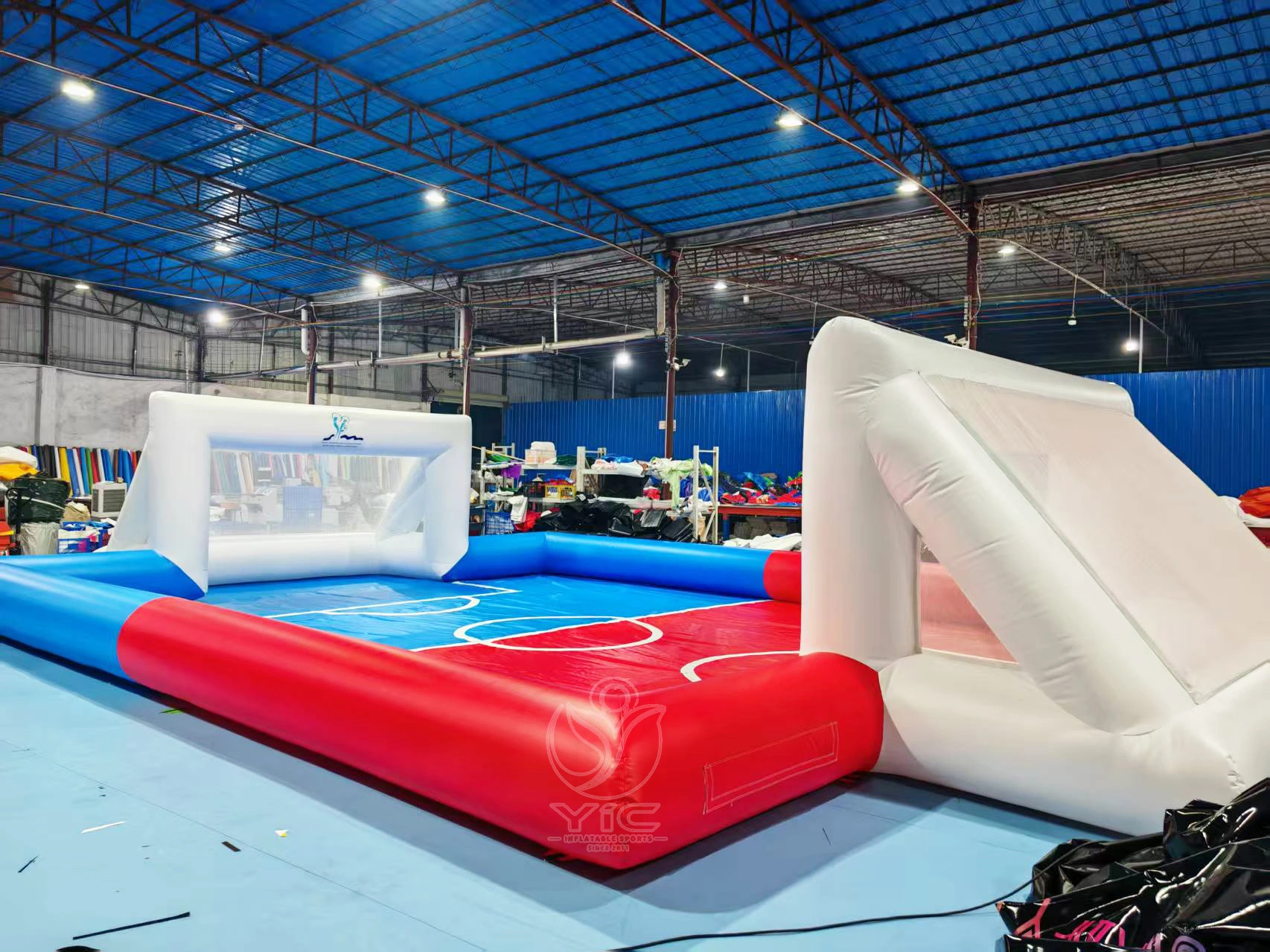
Inspect, document, and decide whether to isolate the unit
Record the product name or model, date, operating conditions, location of the damage, photographs, and any recent repair history. If a leak, tear, loose anchor point, failed seam, damaged valve, blower issue, or unusual deformation could affect operation, take the unit out of service until the responsible operator has obtained appropriate review.
Distinguish minor surface damage from structural damage
A small puncture in a non-structural area is different from damage to a seam, internal baffle, anchor, handle, entrance, slide surface, pool, or load-bearing connection. Use only repair materials and steps approved for the product material and construction. Do not apply household solvents, generic adhesives, improvised stitching, or heat to an inflatable unless the manufacturer or qualified repair professional confirms compatibility.
Choosing a local commercial inflatable repair service
For a “water slide repair near me” search, ask the repair provider whether they work on commercial inflatables and the exact material and construction type, what inspection they perform, how they document the repair, and whether they advise on return-to-service checks. Confirm transport, turnaround, warranty, and responsibility before handing over the unit. Local availability and qualifications vary; verify them directly.
Contact the manufacturer with useful information
If local repair is unavailable or the problem may be structural, send the manufacturer clear photos, model or order reference, material details if known, dimensions of the damaged area, repair history, and a description of how the issue appeared. Ask whether the issue should remain out of service and which qualified repair path or model-compatible materials to consider.
Drying, cleaning, and storage after use
Follow the product’s supplied care instructions for cleaning, drainage, drying, folding, and storage. Water products should be fully drained and dried as directed before storage. Avoid fixed drying times or direct-sun instructions unless they are specified for the actual product, as construction and materials can differ.
Decision before quotation
What this guide means for a commercial buyer
Return an inflatable to service only after the damage is understood, the repair method matches the product, and the responsible operator has confirmed the required checks.
Buyer checklist
Information to confirm before comparing suppliers
- Model identity, photos, repair history, and affected area recorded
- Product isolated from use if structural integrity or equipment is uncertain
- Repairer experienced with the material and commercial construction
- Approved repair materials and methods confirmed for the exact product
- Inspection and return-to-service decisions documented
Risk control
Common mistakes to avoid
Using a generic adhesive, solvent, stitch, or patch on an unknown material
Treating a seam or anchor repair as a cosmetic surface patch
Returning a unit to use without appropriate inspection
Assuming a local listing or online kit proves repair competence
Factory conversation
Questions to send before the order is released
- Does this damage affect a structural seam, baffle, anchor, or connection?
- Which material and repair methods are approved for this model?
- What photos, model details, and repair history are needed for assessment?
- What inspection should be documented before the operator returns the unit to service?
Buyer FAQ
Inflatable Maintenance and Repair FAQ
Where can I get an inflatable water slide repaired near me?
Search for a commercial inflatable repair provider in your area and verify that they work on the product’s material and construction. Ask what inspection and repair records they provide. YIC is a manufacturer, not a local repair dispatch service; contact the factory with the model reference and photos to ask about model-specific guidance.
Can I repair a commercial inflatable seam with a DIY patch?
A patch may not restore a structural seam, baffle, anchor, or other high-stress area. Keep the product out of service if its integrity is uncertain and have the damage reviewed by the manufacturer or a qualified commercial-inflatable repair professional.
What information should I provide to a repair service?
Provide the product model, material if known, photographs, damage location and size, operating history, previous repairs, and any product instructions. This helps the repairer assess compatibility and decide whether inspection or transport is needed.
Can I use any vinyl glue or solvent on an inflatable?
No. Adhesives, solvents, heat, and stitching methods can be incompatible with some materials or constructions. Follow the manufacturer’s instructions or obtain guidance from a qualified repair professional before applying a repair.
Explore relevant commercial inflatables
Compare the product categories that relate to this buying guide, then send YIC the models, quantity, destination, and customization details you want quoted.
Related buyer resources
Talk with a commercial inflatable manufacturer
Have a product list, custom idea, or venue plan? Send your requirements to YIC and include the destination market, quantity, dimensions, artwork, and target delivery date. You can also browse the commercial product catalog.